Face the camera
Use a straight-on portrait where both eyes, cheeks, and jawline are visible.
Your photo quality can change how an AI reads symmetry, facial landmarks, lighting, and skin detail. Use this guide before uploading a selfie or portrait so your attractiveness score reflects your face, not a blurry angle or heavy filter.
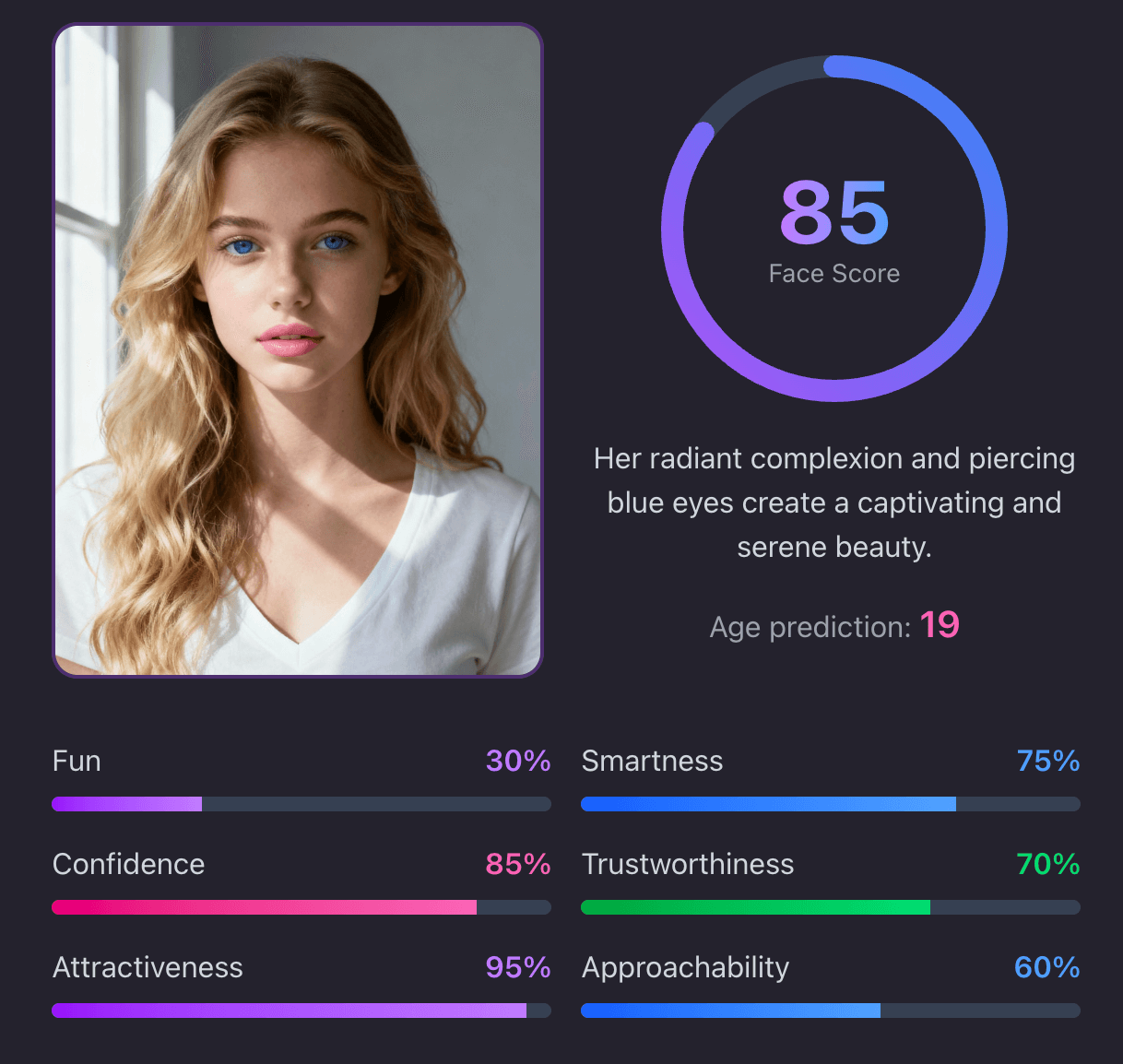
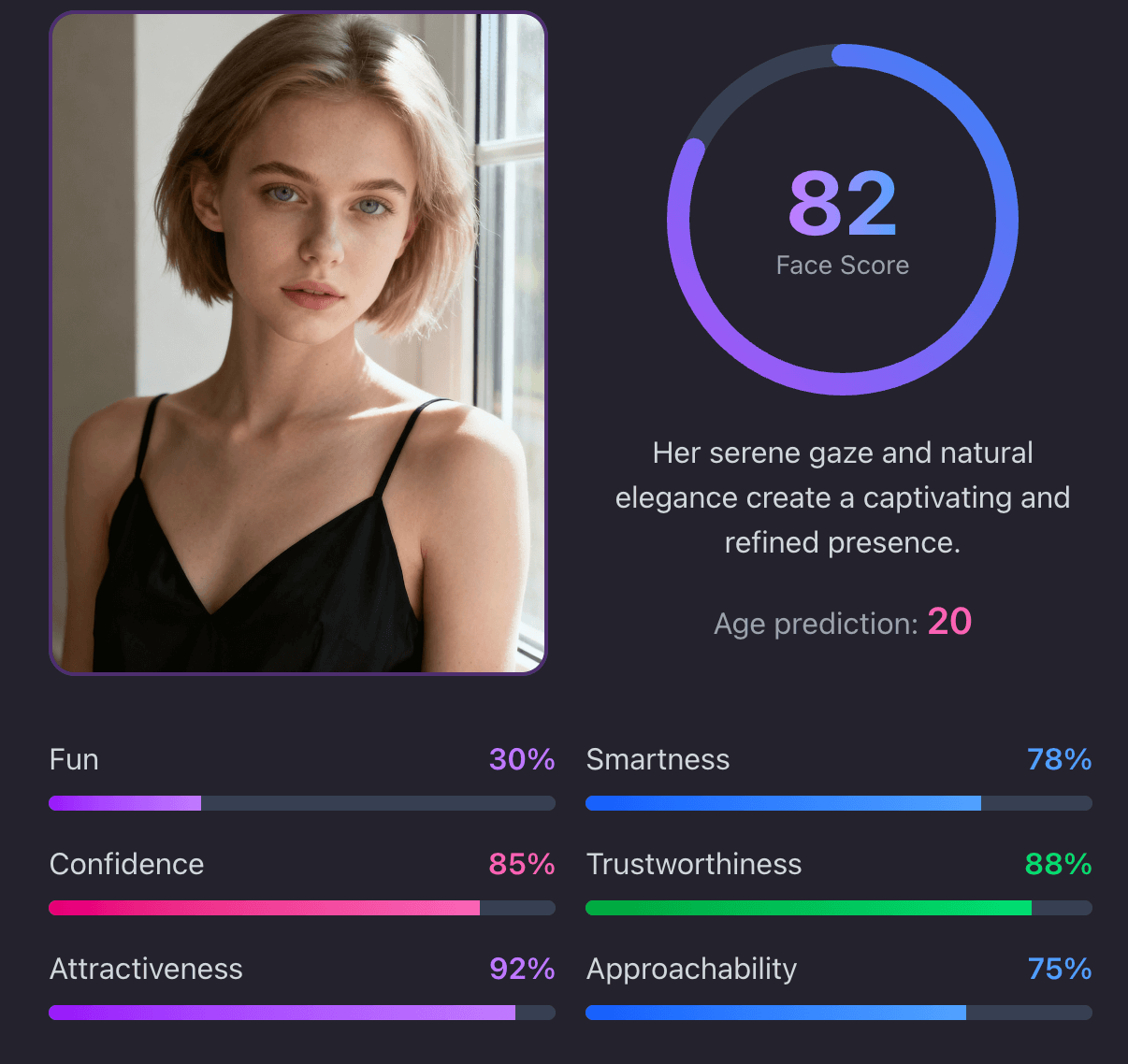
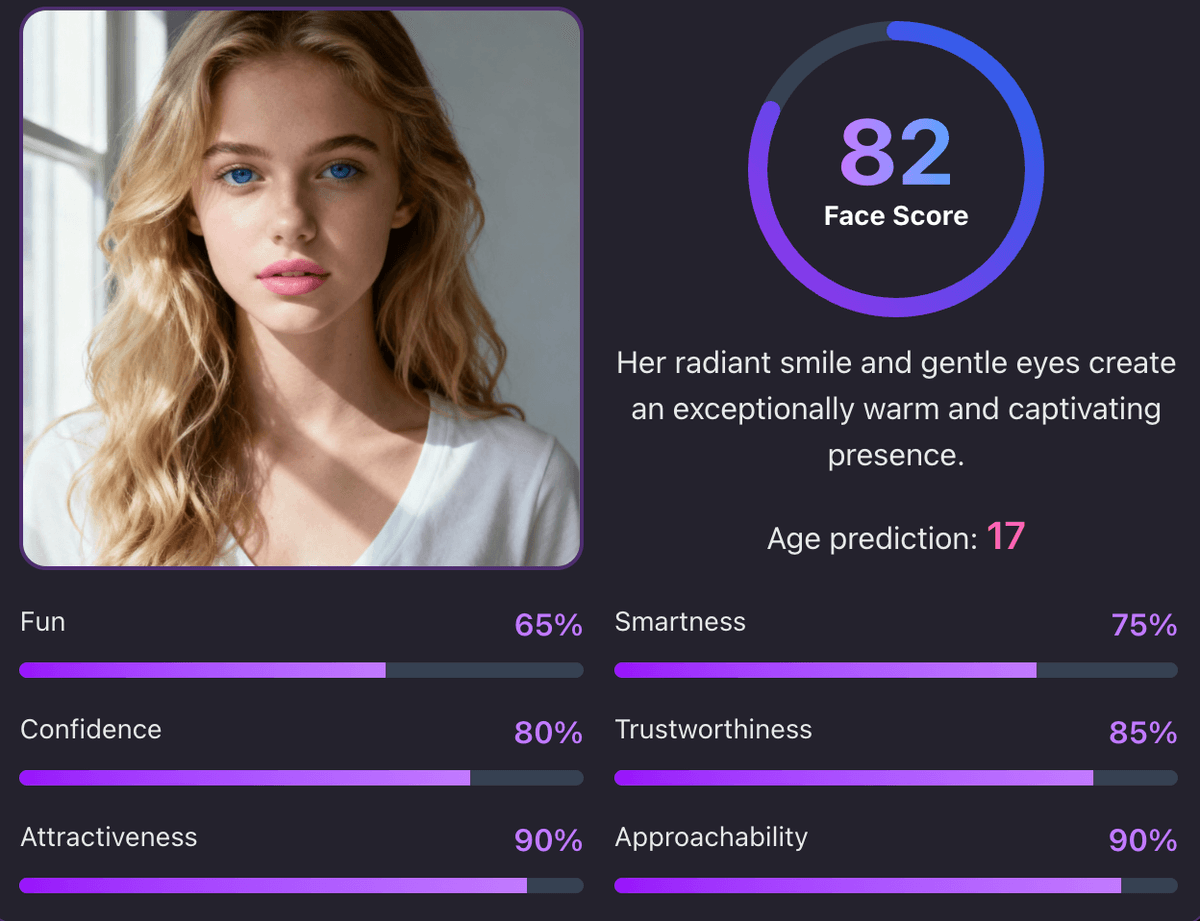
Before you upload, make sure the image gives the AI enough clean visual information to analyze facial features consistently.
Use a straight-on portrait where both eyes, cheeks, and jawline are visible.
Soft window light usually gives the AI more reliable details than harsh shadows.
Crop from the shoulders up and avoid group photos so the system reads the right face.
Beauty filters, heavy edits, and stickers can distort the features being measured.
Remove sunglasses, hair across the face, masks, and anything that covers key landmarks.
Use a photo you are comfortable uploading, and avoid documents or private spaces in the background.
AI attractiveness tests read visual signals from the image itself. If the photo hides your face, changes proportions, or adds artificial smoothing, the system has less reliable information to work with.
A better photo does not mean a staged or edited photo. It means a realistic image with enough detail for facial landmark detection, symmetry checks, and proportion analysis.
If your bigger question is "how attractive am I?", use these photo tips first, then read the how attractive am I guide to understand what the score means and when to retest.
This short prep flow helps you get a more useful score without overthinking the upload.
Pick a recent photo taken at eye level with your face centered and your expression relaxed.
Make sure your face is not hidden by shadows, blur, hats, sunglasses, hair, masks, or filters.
Run the AI attractiveness test once, then try a second clean photo if the first image was angled or low quality.
If one result feels surprising, try another clean photo before drawing conclusions. The goal is not to chase a perfect score; it is to separate face analysis from photo noise.
Upload a Better PhotoYes. Dark lighting, blur, filters, strong angles, or covered facial features can make the AI less consistent. A clear front-facing portrait is the best way to reduce photo-quality noise.
A natural smile is fine. Avoid exaggerated expressions if you want a more neutral facial analysis, because extreme expressions can change eye shape, cheek position, and facial proportions.
Both can work. The best image is not necessarily the most polished one; it is the one with even light, a centered face, realistic detail, and minimal editing.
If you want a steadier read, compare two or three clean photos. Look for patterns across results instead of treating one image as a final judgment.